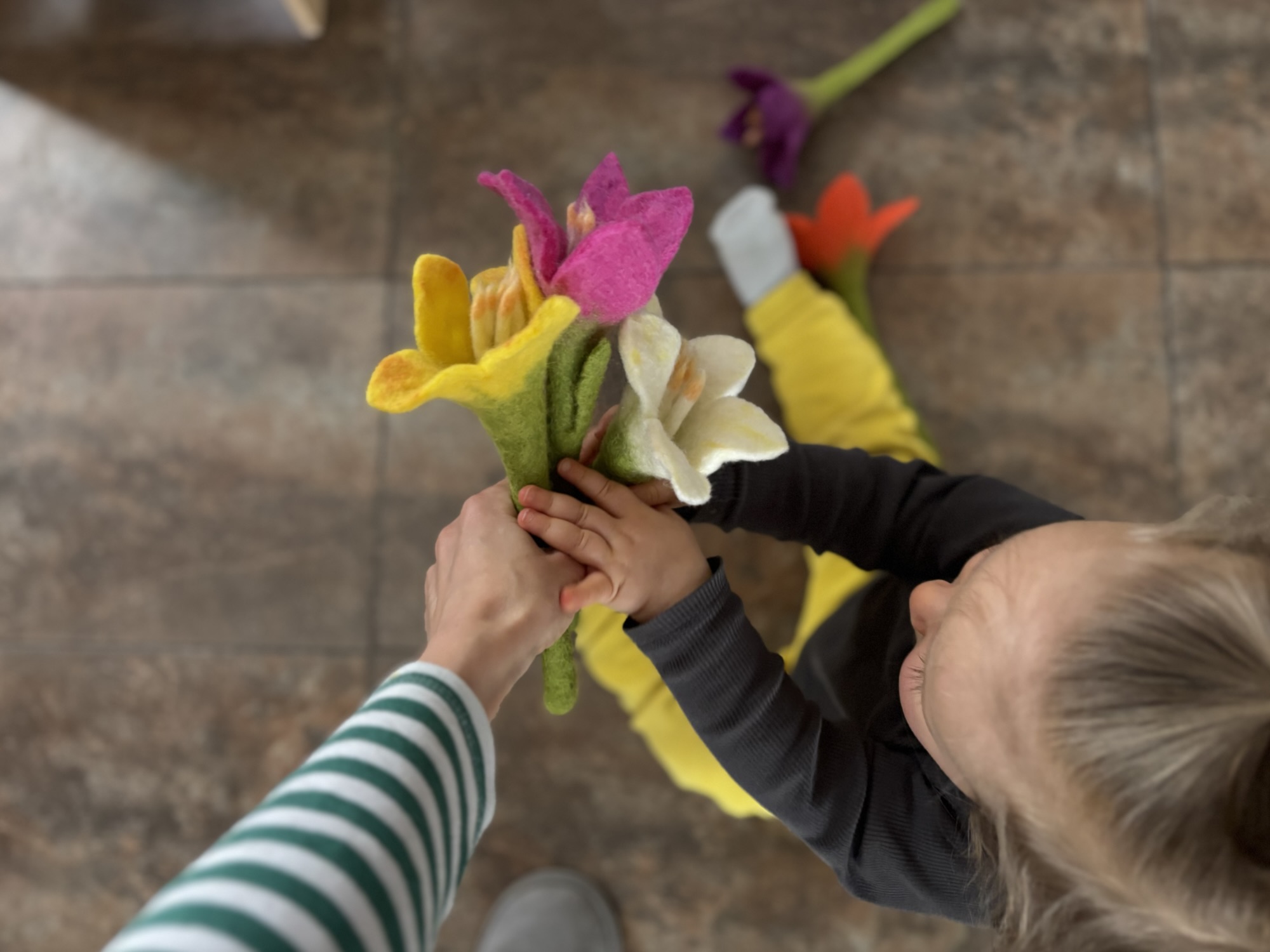
We’ve all been there: we prepare a beautiful basket of ten different animal figurines, thinking we are providing “rich” opportunities for play. Instead, we watch our child dump them all out, shuffle through them for ten seconds, and walk away.
In my practice as a Learning Designer, I’ve realized that the most profound learning doesn’t happen with abundance. It happens with three. Whether it’s flashcards, blocks, or figurines, three is the cognitive “sweet spot” where play transforms from accidental to intentional.
Here is why three is the magic number, and why it stays relevant through the first three years of life.
1. Beyond Subitizing: Seeing without Counting
Humans have an innate ability called subitizing—the capacity to instantly recognize the quantity of a small group of objects without actually counting them. For a toddler, that limit is usually three.
- One or two objects are too simple; the brain “solves” them instantly and loses interest.
- Four or more objects create “visual noise.” The child stops looking at what the objects are and starts focusing on the mass of things. They start sorting or throwing instead of engaging.
- Three objects provide just enough complexity to be interesting, but not so much that they overwhelm the child’s limited working memory.
2. The Biomechanics of the Third Object
This is the part that fascinates me as an observer. A child has two hands. With two objects, the equation is simple: one for the left, one for the right. Equilibrium. The third object is the disruptor. It forces the child to think: How do I handle this? Do I put one down? Do I try to tuck it under my arm? Do I pass one to my other hand? This “problem of the third object” is a massive workout for the executive functions of the brain. It moves the child from simple grasping to strategic planning.
3. From Coincidence to Intentionality
In the world of building blocks, we have a saying: “Two is a coincidence, three is a choice.”
- When a toddler puts one block on top of another, it might be an accident.
- When they pick up that third block and carefully place it on top, they are demonstrating a conscious plan. They are building a sequence. They are becoming architects of their own environment.
Where to apply the “Rule of Three”:
- Flashcards: Show only three at a time. It allows the child to compare and contrast (e.g., Which one is the bird?) without their eyes darting around a cluttered field.
- Choices: “Do you want the red, blue, or yellow shirt?” Three options provide genuine autonomy without the “analysis paralysis” of a full closet.
- Toy Rotation: Instead of a shelf full of cars, try three distinct vehicles. Watch how the play changes from “crashing everything” to “exploring how this specific wheel moves.”
Until what age?
While the physical “two hands, three objects” challenge is peak for ages 12 to 24 months, the cognitive Rule of Three persists. Even in adult learning design, we know that people remember information best when it is delivered in “chunks” of three.
By limiting the environment to three items, you aren’t “limiting” your child. You are giving them the gift of focus. You are clearing the path so they can finally stop shuffling and start seeing.
Leave a Reply