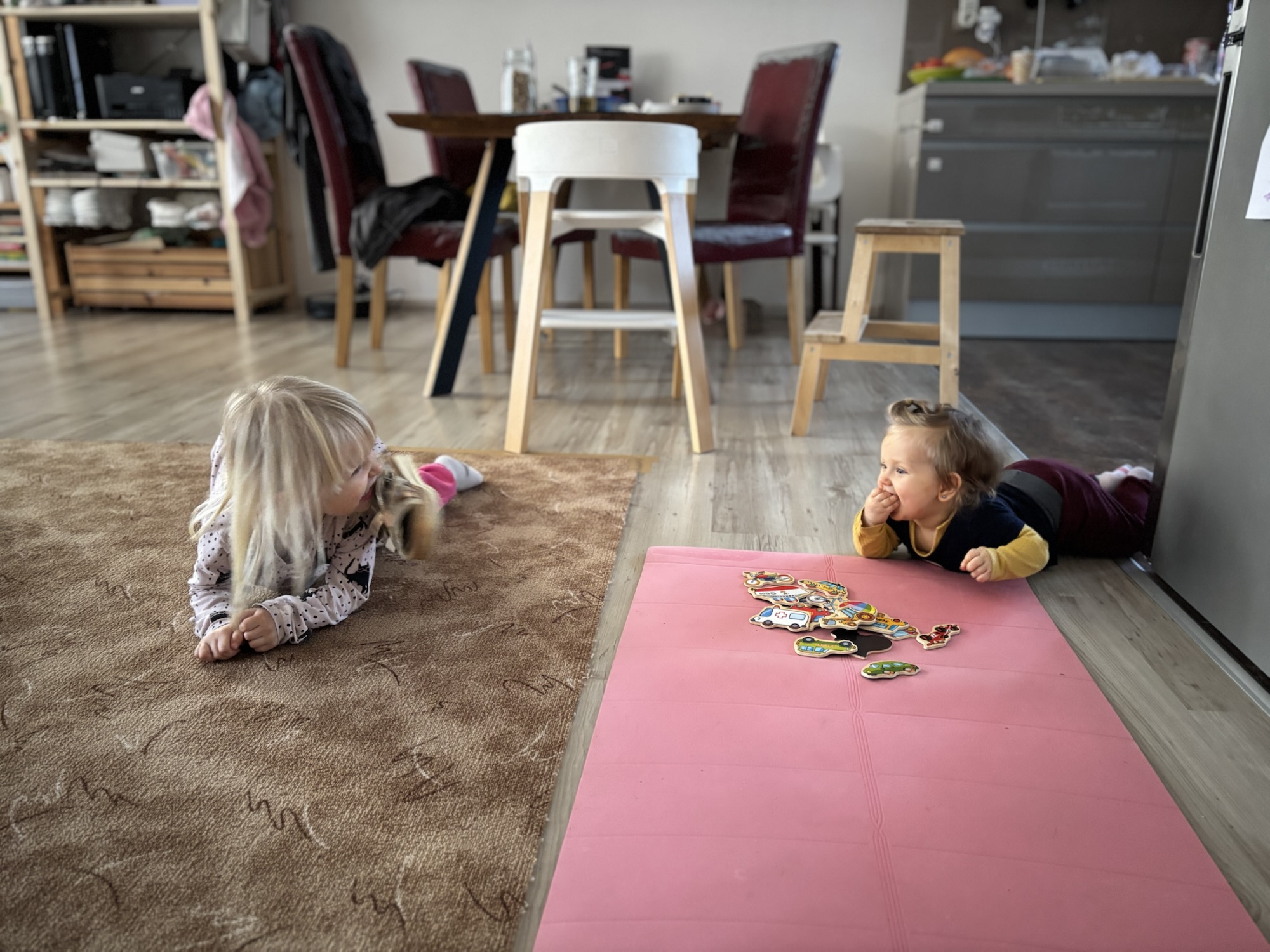
You wake up on a Saturday morning feeling great about the fact that the weekend is finally here. You have visions of a slow coffee and perhaps a bit of creative work. But by breakfast, reality hits. It is clear that your children are going to be at the center of everything today—no independent play in sight.
So, what can you do to essentialize your day as a parent? How do you move from parenting by default to parenting by design?
The secret lies in quality over quantity. Our children don’t need our constant, divided attention; they need their neurophysiological and emotional systems to be “saturated.” When these systems are fed, the psychological pressure drops. The children settle. And finally, the space for your own “me-centered” time opens up naturally. Or, at the very least, you can claim that space without the nagging guilt that you weren’t “good enough” today.
This is the Parent’s Pareto: 20% of the right intentionality satisfies 80% of your child’s needs. Without intentionality, parenting is like throwing spaghetti at the wall and waiting to see what sticks.
To stop throwing spaghetti and start designing your day, here are the four “drawers” you need to open.
1. The Grounding Drawer (Motor Satiety)
A child’s brain needs strong signals from the body to feel secure. If they are “climbing the walls” or constantly hanging on your leg, they are likely seeking proprioceptive input (pressure in joints) or vestibular stimulation (movement).
- The Design: 10 minutes of “heavy work” or intense movement.
- Examples: For the 1-year-old, crawling over a mountain of pillows. For the 3.5-year-old, jumping into a pile of cushions or a “tug-of-war” with a towel.
- The Result: It earths their nervous system. A grounded child is a child who can finally sit still.
2. The Frequency Drawer (Emotional Satiety)
If you are physically present but mentally checking your inbox, your child feels the “frequency gap” and will fight to close it.
- The Design: 10–15 minutes of The Silent Companion presence.
- The Rule: No phone, no teaching, no narrating. Just sit on the floor and witness them. Let them lead the play 100%.
- The Result: When their “connection cup” is full, they are much more likely to grant you the freedom to drink your coffee in peace later.
3. The Reset Drawer (Sensory Satiety)
Modern homes are often sensorially “flat,” leading to a strange kind of boredom that manifests as irritability. Sensory play acts as a neurological reset.
- The Design: Spontaneous flow through textures.
- Examples: A mid-afternoon water bath with cups and spoons, a basin of dry rice, or playing with mud on the balcony.
- The Result: Sensory play triggers flow. It’s the fastest way to “buy” yourself 20 minutes of silence while they are deep in exploration.
4. The Competence Drawer (Real-Life Satiety)
Children have a primal urge to belong to the “adult world.” When we push them away to “go play” so we can finish chores, we are creating friction.
- The Design: Integration over entertainment.
- Examples: Let the 1-year-old pull laundry out of the machine. Give the 3.5-year-old a spray bottle and a cloth to “clean” the windows.
- The Result: It is slower and messier, but it satisfies their need to feel capable. A child who feels competent is a child who feels satisfied.
The “Perfect Enough” Shift
When you stop measuring your day by how many hours you “spent with them” and start looking at which drawers you opened, the pressure evaporates. You aren’t a service provider; you are a designer of their environment and your shared frequency.
If you opened these drawers today, you did enough.
Did I do enough today?
You can sleep peacefully tonight if:
- You grounded their body with at least one intense physical or “heavy work” moment.
- You shared their frequency for at least ten minutes, being a witness instead of a director.
- You invited them into reality, allowing them to feel competent in a real-world task.
Leave a Reply